


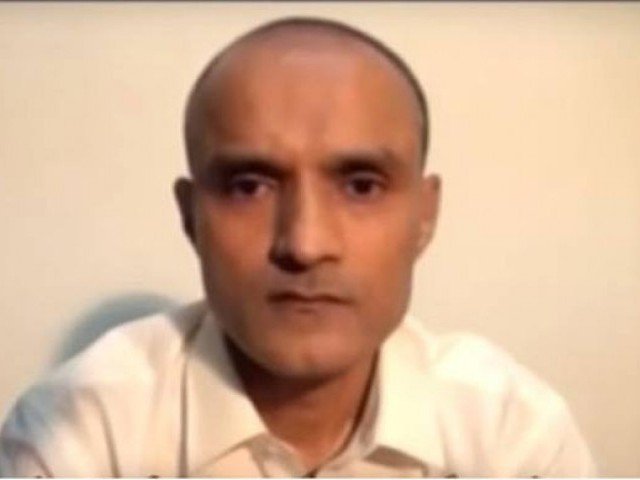
The Hague – The International Court of Justice in The Hague is currently holding public hearings on the case of Kulbhushan Jadhav, the former Indian Naval officer, who was arrested and sentenced to death by Pakistan in April over allegations of espionage and abetting terror.
The one-day hearing involves two sessions of an hour-and-a-half, according India and Pakistan an opportunity to make their case, starting with India in the morning. Pakistan’s session will follow later in the afternoon. The court’s judgment, which could follow as early as in a few days or take several months, is binding with no appeal.
————————————————————————————————————————–
5.10 pm: Speculations are rife that Pakistan might broadcast the video of the alleged confession at second half of the hearing at the ICJ.
4.30 pm: With the Pakistan session a few hours away, Pakistan channels are reporting that their delegation will accuse India of terrorism in its arguments later in the day.
3.40 pm: Harish Salve says to the media outside the court, “We are here in the hope that Jadhav will not be executed. At present, we are looking for provisional measures.”
3.20 pm: The Delegation from Pakistan is:
Moazzam Ahmad Khan, Ambassador of Pakistan to UAE as Agent
Mohammad Faisal, DG (South Asia & SAARC) as Agent
Syed Faraz Hussain Zaidi, Counsellor of the Pakistan Embassy in the Netherlands as Adviser
Q.C. Khawar Qureshi as Counsel
Asad Rahim Khan as Junior Counsel
Joseph Dyke as Legal Assistant
3.10 pm: The ICJ judge closes the session. Pakistan will present its case later in the day.
3.10 pm: Mr. Mittal presents his closing statements and thanks the ICJ.
3.00 pm: Mr. Salve says – In its letter of 21st March, Pakistan said to India that the request of consular access can be entertained if India assists in the investigation. The more serious the charge the greater the need to ensure procedural safeguards to ensure that the accused gets a fair trial. The confession played a significant part in the case. The allegations were made even as Jadhav’s basic rights were denied. India has a strong case that provisional measures be executed that Pakistan take all measures to ensure Jadhav is not executed; that the Pak. government ensure that no action be taken that might prejudice the rights of India or of Jadhav.
2.55 pm: Mr. Salve says,” The rights of Article 36 are sacrosanct. The rights of consular access are a significant step in the evolution of human rights in international law. Article 6 of the ICCPR recognises that no one can be arbitrarily deprived of their lives. In determination of criminal charges, everyone can be entitled to a fair hearing. The person should be given Legal assistance of his own choosing and should be informed of his rights in the interest of justice. In order to make this principle a reality, adherence to rules of Vienna Convention becomes vital. The graver the charge greater is the need for punctilious adherence to the Vienna Convetion.
2.45 pm: Mr Salve: On obtaining information on Jadhav’s detainment India sought consular access on the same day. Following that, many requests for access has been made by India. Indian Nationality of Jadhav of has never been in doubt. Thus the Vienna Convention has been breached by Pakistan in the issue of consular access to Jadhav. There was a purported confession by him that was the basis of their case. The Vienna Convention does not include any exceptions in respect to Consular access. This underlines the farcical nature of the trial. On 19th April India handed over a note to Pakistan seeking details of the charges and the summary of the trial proceedings.
2.33 pm: Mr. Salve says,”India relies on the Vienna Convention. Mr. Salve refers to the case between Bulgaria and Belgium as precedent in the issue of jurisdiction. The agreement between India and Pakistan on consular access is irrelevant. India does not rely and does not need to rely on this agreement. It bases its case solely on the Vienna Convention.
2.20 pm: Mr. Salve says,” India asserts in the application that Pakistan denied consular access to Jadhav. The reasons for the said denial was also not given to India. India has not been given a copy of the charges or the verdict and hence has been unable to check the charges. The Vienna Convention offers no exception. India asserts that the breach of the Vienna Convention is fatal. Under Article 36, jurisdiction exists in respect of all cases that parties refer to and in respect of all matters specially provided for in treaties and conventions.”
1.58 pm: Harish Salve as India’s counsel starts presenting his statement – I am grateful to the ICJ for taking up the case at such short notice. India has moved ICJ under Article 14 seeking suspension of the sentence awarded to Mr. Jadhav. The case is grave and urgent. Mr. Salve refers to precedent of past cases including LaGrand case between Germany and US in 1982. The case refers to the hearing before the ICJ which concerned the Vienna Convention on Consular Relations.
Harish Salve says,”Jadhav’s mother has filed for an appeal which was transmitted to Pakistan via diplomatic paths. The communication of 12th May does not clarify on what his charges are or any clarity on the request for clemency. Pakistan said that Jadhav’s sentence is based on credible evidence in espionage against Pakistan. India refuses these allegations and says that Jadhav was kidnapped and framed. India has taken measures to ensure appropriate legal measures for Jadhav. It is not known whether Jadhav will seek clemency in the present circumstances.
